Reflections from the 2026 Merton Lawyers Startup Board Conference
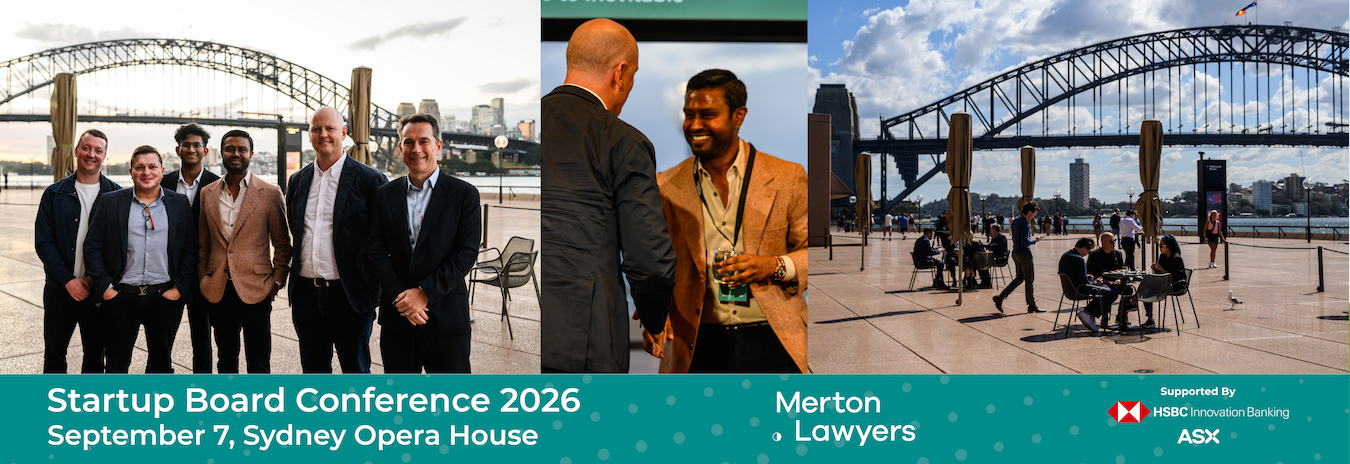
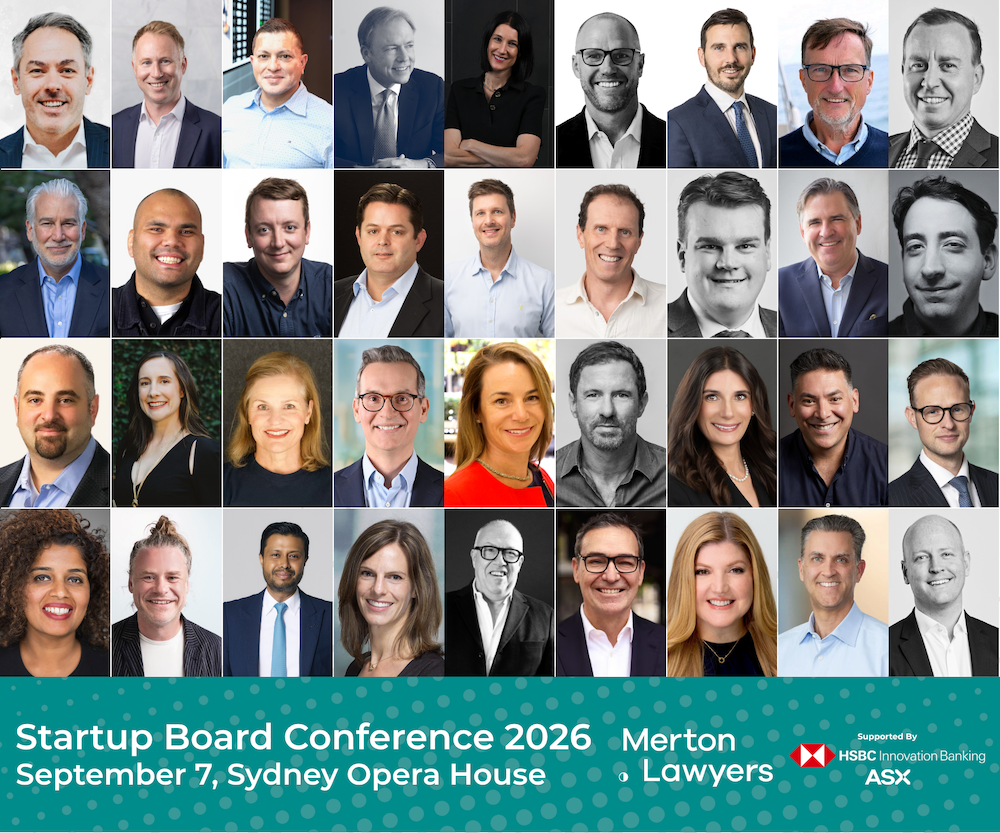
On Monday September 7th, we welcomed venture capitalists, founders, ecosystem champions and over 30 speakers into the iconic Sydney Opera House for our second Merton Lawyers Startup Board Conference. As I stood up to open the proceedings, I was struck by how far we have come with our mission, c/o the foundations we’ve built with our multi-year initiatives Project Frontier and Project Odyssey.
Over the last seven years, we've increasingly focused our firm on the people who start, fund and work in startups and growth companies. We didn't want to just sit on our hands - we wanted to be a catalyst for growth, and materially impact with our work and the intentionality behind all that we do.
That began with our Project Frontier and a simple goal: to help Australians land better in America. It continued through Project Odyssey, where our research uncovered a real gap in governance across the ecosystem, with founders and investors sitting on boards without much experience.
The Startup Board Conference is an attempt to close that gap. We’ve made this Conference free to attend so it could be as accessible as possible, and invite-only because the strength of the day is always the people in the room. It was never meant to be a classroom or a lecture on black letter law. The goal was simple: for everyone to level up, and connect.
I’ve compiled a summary on the sessions with some thoughts and insights on how the day ran, and a glimpse at the tone of the discussion. And of course, our many thanks once again to our Key Partners on the day in HSBC Innovation Banking & ASX.
Thank you once again,
Anthony Curtin, Cofounder Merton Lawyers.
Follow me on LinkedIn HERE
2026 MERTON LAWYERS STARTUP BOARD CONFERENCE PROGRAM
Session 1: The CEO You Have to Become
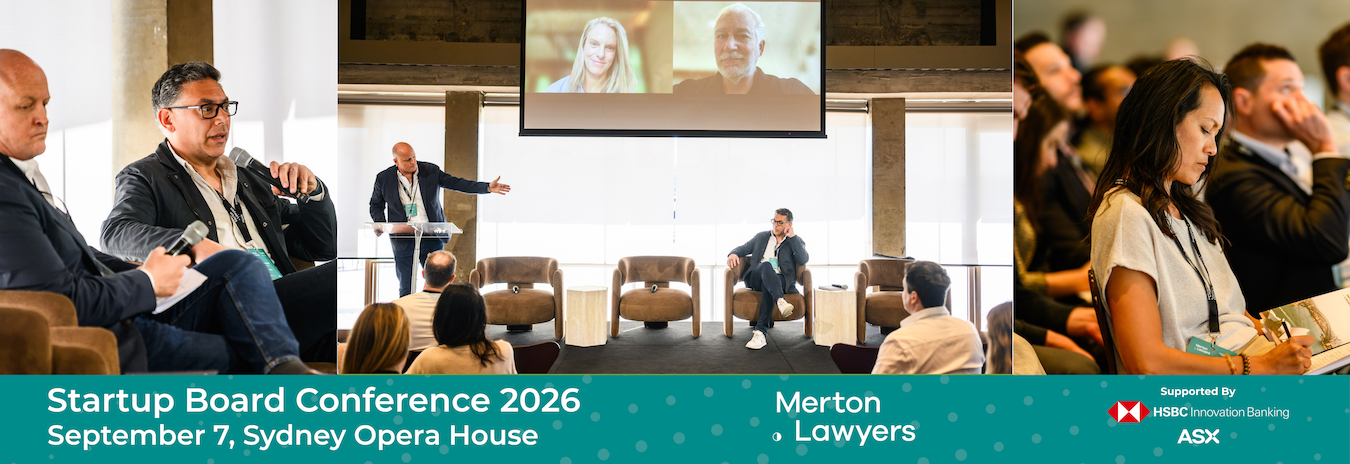
Featuring: DANIEL G. WEISS (Angeleno Group, LA), PAUL NAPHTALI (Rampersand, Melbourne) SHANNON MARSHALL (J.P. Morgan Private Wealth & American Australian Council, NYC)
I opened this session focused on a question that came out of our Project Odyssey research: investors spend a lot of time asking whether companies can scale, but perhaps not enough asking whether the people can scale with them.
The panel took that and ran. The conversation centred on how a founder's role changes the moment a board is formed, and the traps that come with it. Paul described the temptation to treat the investor director as a future fundraiser, where "every board meeting and every interaction becomes a pitch." Of particular interest was his observation that the companies that kept growing shared one common factor: "the regeneration of their leadership team."
Shannon turned the lens on diligence, encouraging founders to talk not just to an investor's star founders, but to someone they've backed who's struggling right now. And Daniel reminded us that when the true north is the flourishing of the business - not any one individual - everyone can walk forward in lockstep.
Session 2: Boards That Scale You
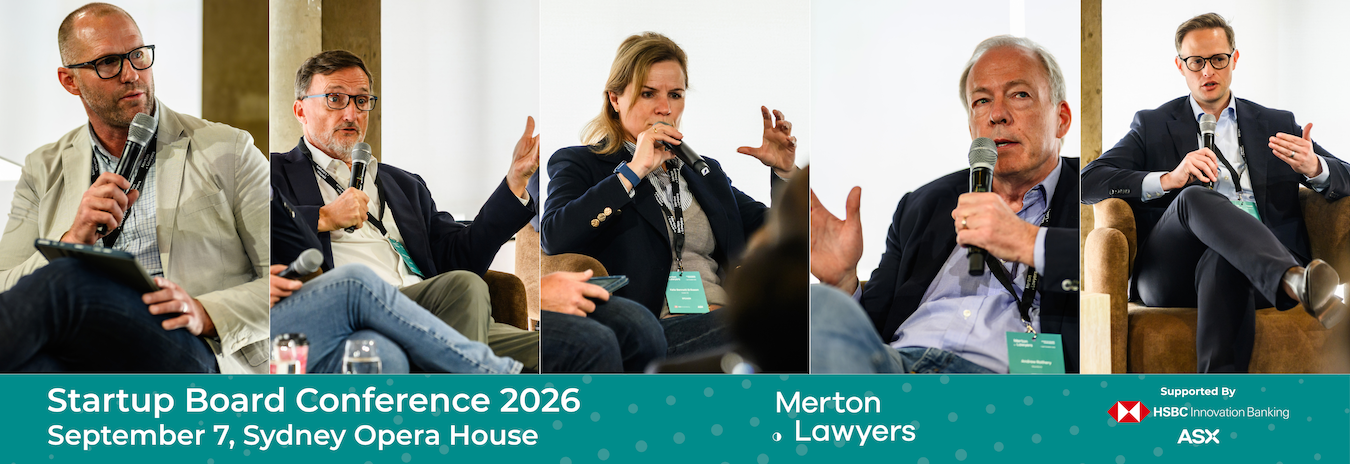
Featuring: ANDREW ROTHERY (Koda Capital, Sydney), CHARLES CARNEGIE (21networks, Sydney), KATE BENNETT ERIKSSON (CoAct Capital, Melbourne), PAUL ROTA (Sullivan & Cromwell LLP, Melbourne), ANTHONY WRIGHT (Zai Node, Melbourne)
A great board shouldn't simply govern a company - it should be there to really help it grow. That idea set the tone for this panel, and everything that followed built on it.
The conversation centred on the journey from informal advisors to a formal board. Charles made the case for building an informal board of advisors early, "because it is lonely," before taking on a formal board, which he described as very much a step function. Of particular interest was Andrew's cautionary take on choosing directors that are actually willing to roll up their sleeves and get to work.
Anthony Wright kept us grounded in trust, reminding the room there's nothing worse than surprises in a board meeting. Kate brought it back to the customer, and a lens on what can often be missing from the board papers. And Paul left us with a message I'll keep repeating often: Don't treat a board meeting as merely a governance formality. It's there to help your company grow.
Session 3: The Business Case for Giving a Damn
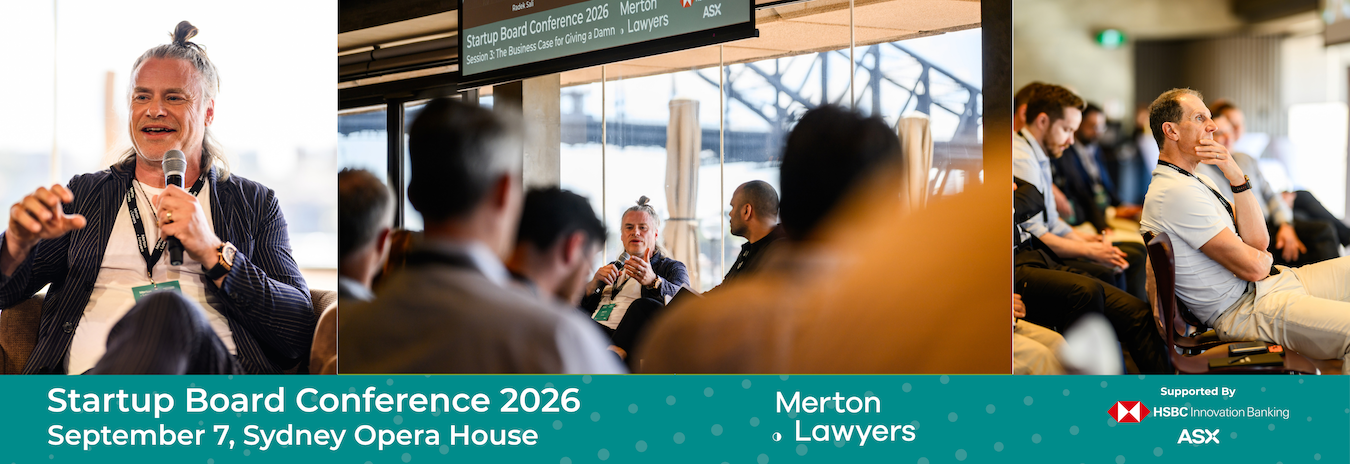
Featuring: RADEK SALI (Light Warrior Group, Melbourne), DANIEL VAN BOOM (Forbes, Sydney)
Purpose doesn't have to sit apart from performance. Done properly, it can add genuine growth advantage and become a real differentiator - and few people have lived that more than Radek, who led Swisse through a $2.1 billion sale.
What I loved about this conversation was how quickly it moved from purpose to culture, and why culture is the one thing competitors can't copy. Radek challenged the room directly: most of us have a business plan, but how many have a culture plan? In his view, it "needs to be a hard-working document, just like your business plan," reviewed like your financials and updated just as regularly.
Daniel steered the discussion into the harder moments, when tough decisions test whether a culture holds. Of particular interest was the idea of giving teams permission to have clumsy conversations, and of leaders owning their failures openly in front of everyone. Radek's closing challenge has stayed with me since: "This is your life. Why do anything else than be the absolute best in what you do?"
Session 4: What It Actually Takes
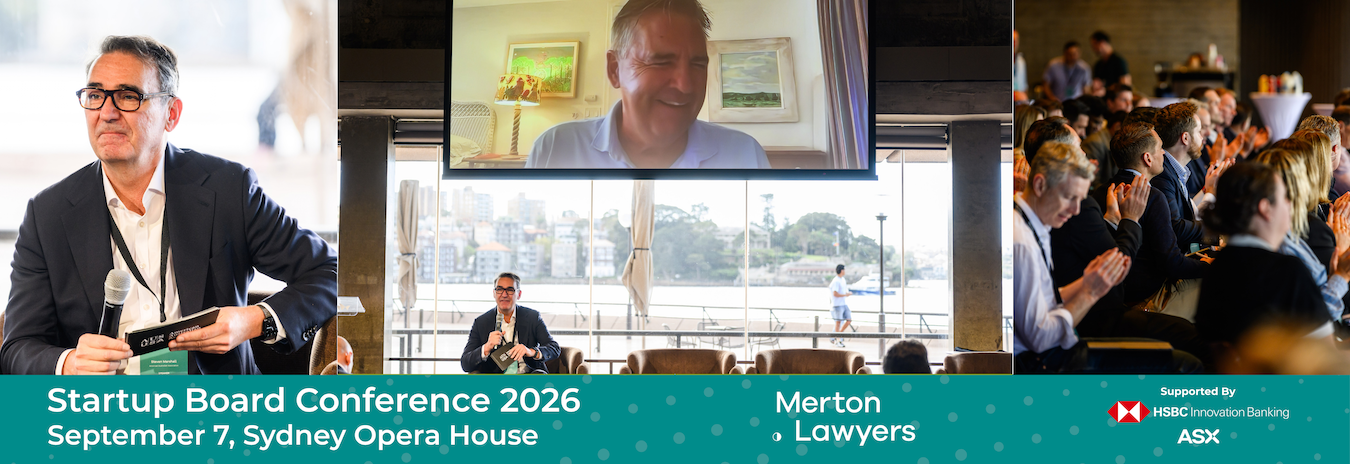
Featuring: JAMIE MONTGOMERY (March Capital, Santa Monica), STEVEN MARSHALL AO (American Australian Association, NYC)
Having made the pilgrimage to the Montgomery Summit each year, I was especially looking forward to this one - and it didn't disappoint.
Steven set the scene with a clear case for the US: the largest economy, capital market and consumer market in the world, and "unequivocally the global epicentre of the AI transformation." For Australian founders, as he put it, "you're pushing against an open door in America."
From there, the conversation became something more personal - a reflection on what it actually takes to build something enduring. Jamie spoke of his experience of transitioning from clients, to investing in those people as investment partners. Of particular interest was the emphasis on relationships built over years, well before any money changes hands, and his advice to create and own a category rather than chase a slice of an existing market, acknowledging the seminal book ‘Play Bigger’ by Al Ramadan and co.
His contrast between how Australians and Americans talk about failure - disappearing versus pivoting - was a significant moment to reflect upon.
Session 5: The Board Member That Never Sleeps
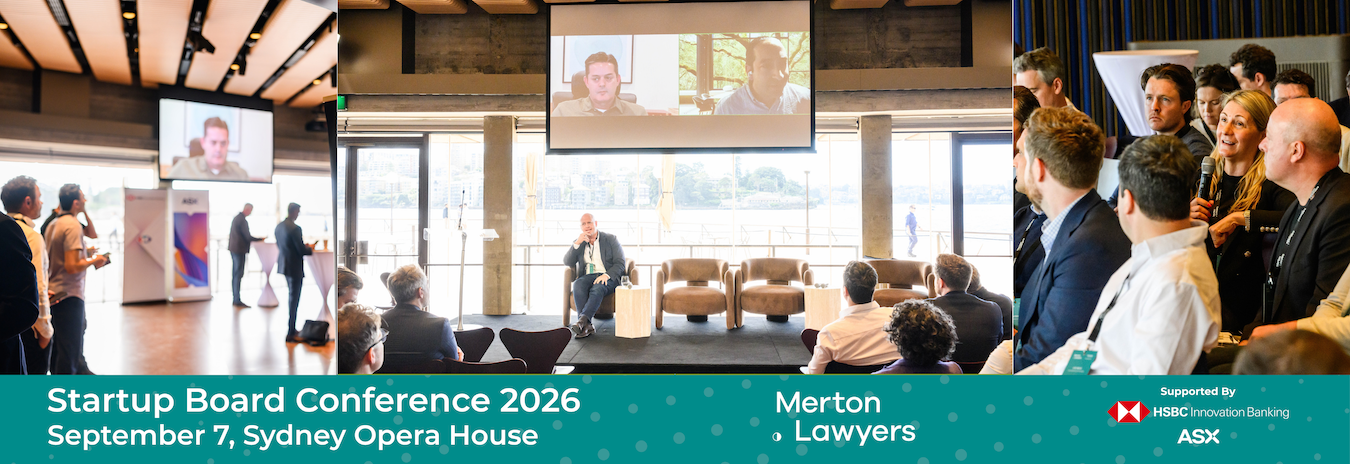
Featuring: DAVID YOUNG (Cooley LLP, Santa Monica), JONATHAN DOTAN (The Starling Lab for Data Integrity, Stanford University, Palo Alto)
AI has very quickly moved from an operational issue to a board-level one, and I loved how fast this conversation got practical.
David's warning to keep AI note-takers and transcripts out of board meetings landed hard in the room, as a practical and cautionary piece of proactive advice. His point wasn't to avoid AI altogether. Using it to draft the agenda, prepare decks and cross-reference prior board materials is "all super valuable. You just want to keep it out of the meeting itself." He framed AI as the biggest value creation opportunity companies will ever see, and an enterprise risk boards have to oversee.
Jonathan brought a view from both sides: his time working on HBO’s acclaimed series Silicon Valley, where the more accurate the show got the funnier it became, and his own experience as a founder in AI, surrounded by monstrous early funding and valuations. What struck me most was his candour about how hard it has been to keep valuations grounded, with the pressure on first rounds only climbing.
Session 6: Trapped at the Cap Table
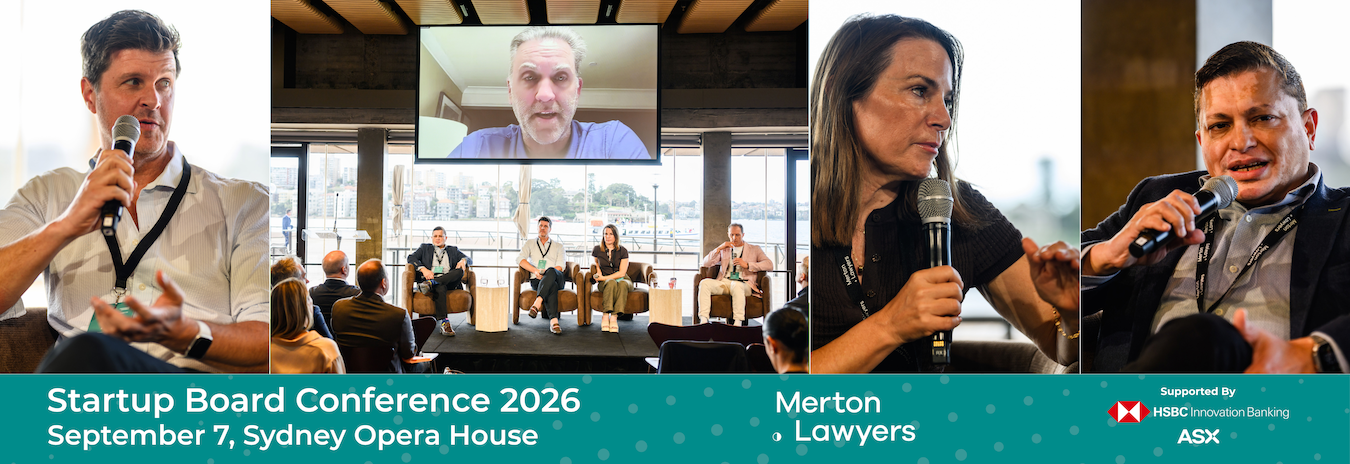
Featuring: AMIT VERMA (ASX, Sydney), IAN BEATTY (SecondQuarter Ventures, Sydney), MELISSA WIDNER (Lighter Capital, Sydney), TIMOTHY HARRIS (Morrison & Foerster LLP, Palo Alto), IAN GARDINER (Jelix Ventures, Sydney)
I loved how candid this panel was about a topic many boards would rather avoid. Liquidity in private companies is hard, and nobody pretended otherwise.
The conversation centred on who is actually around the cap table, and whether they want the same things. Melissa put it plainly: "I've sat on boards where there's literally nine VC funds, and all of them have really different goals." Timothy added a line every founder should remember - good, well-run companies "often raise money when they don't need it."
Of particular interest was the shift from people simply wanting out, to thinking about a company's journey as a series of smaller exits along the way. Ian Beatty walked through a simple mechanism for this: a small clause allowing a sliver of stock to trade each year, with the right approvals. And Amit made the case that founders who see their company as a twenty-year project may be best suited to eventually going public.
Session 7: Beyond Banking
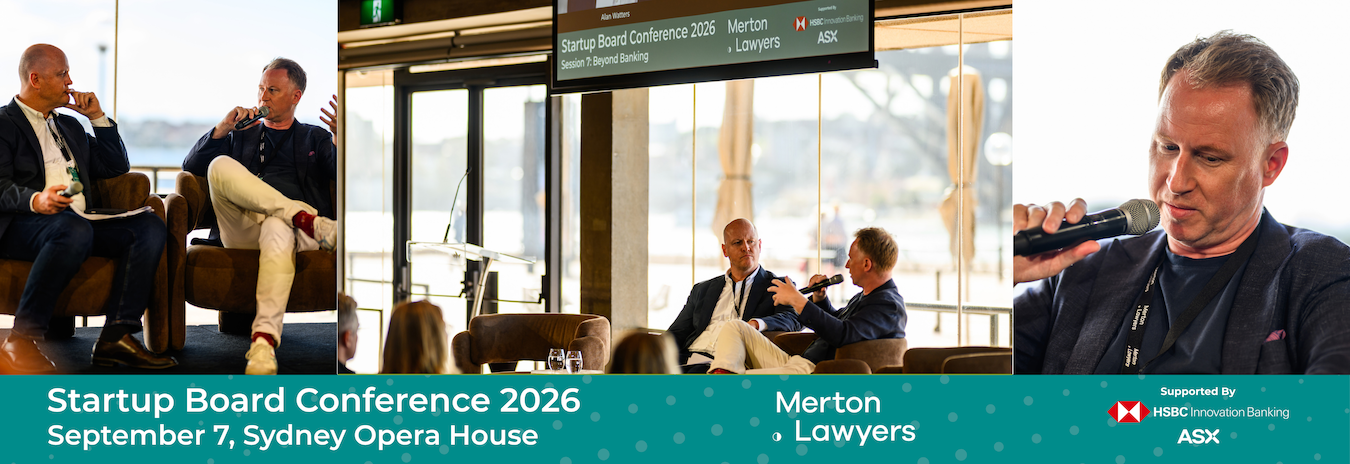
Featuring: ALAN WATTERS (HSBC Innovation Banking AU&NZ, Sydney)
This was a short session, but it said a lot about what a genuine ecosystem partner looks like. Sitting down with Alan, I loved how quickly we moved past banking itself - which he described as the table stakes - into everything around it: introductions to customers, expertise across markets, and a global network that opens doors.
The paying-it-forward mentality is something we've learned from spending a lot of time in the US. Opening up opportunities without asking for anything back is a great mindset, and one I'd love to see more of here. Alan summed it up well: "If we keep on showing up, doing the right thing and connecting people, then we will ultimately get the benefit of it, because the ecosystem gets the benefit of it."
I've seen that firsthand, including Alan leaving dinner to catch a last-minute flight from LA to San Francisco to help a client. The simplest message was maybe the best one: don't be afraid to pick up the phone and ask.
Session 8: M&A from Both Sides of the Table
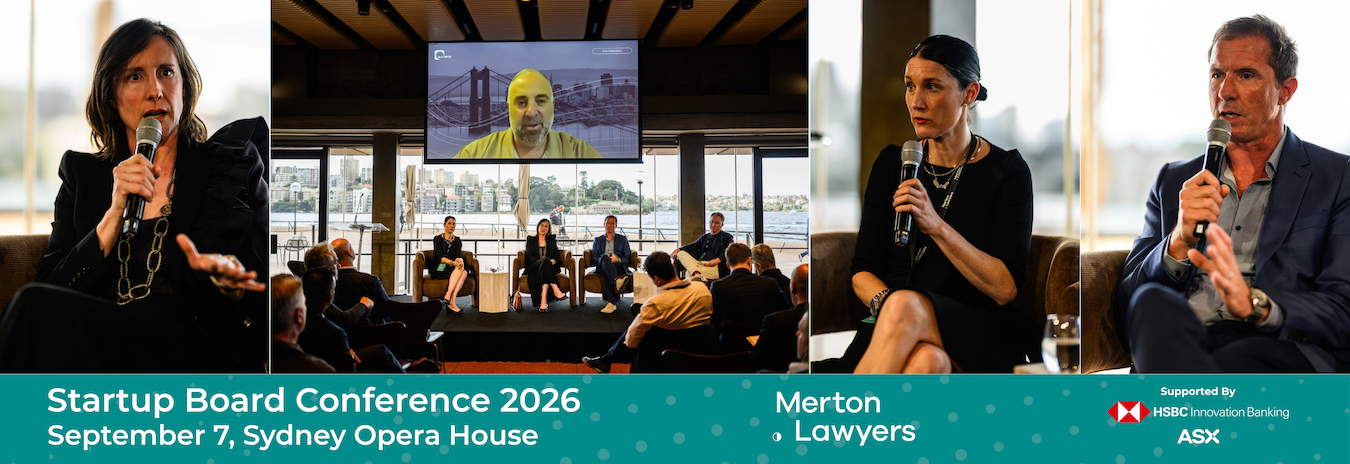
Featuring: ANNABELLE MOONEY (Admiralty Capital Group, Gold Coast), KARA FREDERICK (Jekara Group, Sydney), JOSH SEIDENFELD (DLA Piper, Silicon Valley), MICHAEL PRIDDIS (TNX Data, Sydney), ALAN WATTERS (HSBC Innovation Banking AU&NZ, Sydney)
I really enjoyed the energy in this session which occurred later in the day (it’s a lot of programming for one day!) Exits have long been something Australian founders feel awkward talking about, and the panel took that head on. As Alan framed it from the outset, M&A "should always be a conversation, just like a potential IPO should always be a conversation."
What I loved was how the discussion moved from timing the market to preparing for it from day one. Michael made the point that "some of the fundamental decisions that make you attractive as an acquisition are made way before Series B" - right down to the people you hire in key markets. Annabelle stressed the importance of reading the industry dynamics, because without that you can misjudge the exit window entirely.
Kara and Josh brought the Silicon Valley lens: a mindset of being ruthless about your advantage and whether it's truly sustainable, and an urgency that, in Kara's words, is "a muscle that needs to be exercised here more."
Session 9: Governance in a Crisis
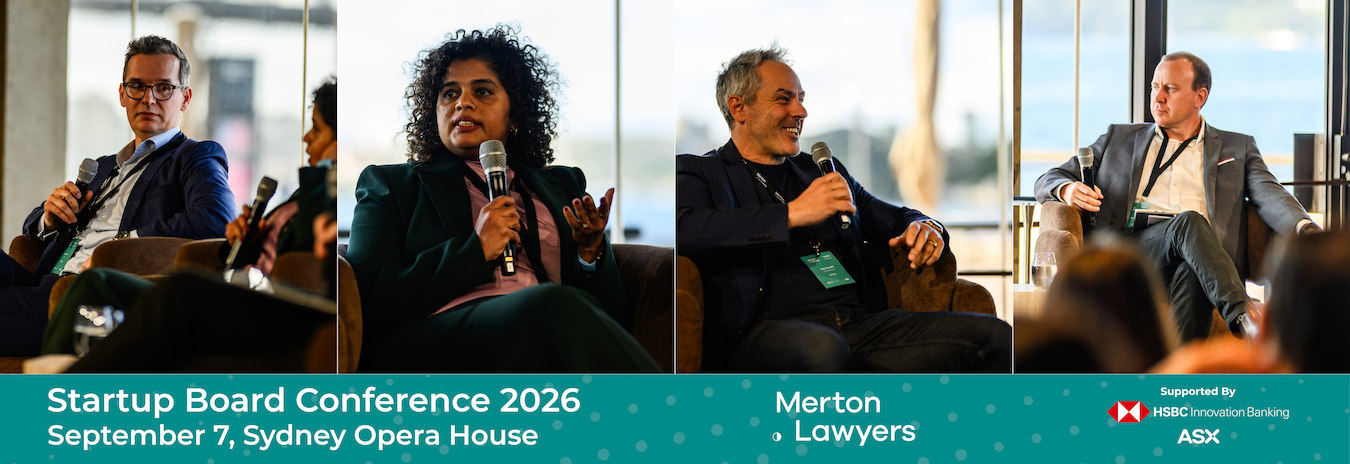
Featuring: ADEM KARAFILI (Light Warrior Group, Melbourne), MARTIN FORD (Teneo, Melbourne), PREETI INCHODY (IYER) (Ankura, Sydney), DANIEL BYCROFT (Merton Lawyers, Gold Coast)
This was the panel nobody hopes they'll need, which is exactly why I valued it so much. Moderated by our own Danny, the discussion kept pulling back from the crisis itself to the habits that prevent one.
Danny's framing has stayed with me: build relationships with external advisors in peacetime, so that in conflict "they're ready to go." Adem was refreshingly direct about the responsibility that comes with a board seat: restructures handled badly can be "an absolute culture killer. Sometimes you get one shot at it." He also left us with a practical check - where your IP sits compared to your trading entity.
Of particular interest was Preeti's point that negotiations are "very personal, very emotional," and her reminder that AI adoption makes a business more efficient, but doesn't automatically make it more valuable. Martin added an honest take: the optimism founders need can also make warning signs harder to hear.
Session 10: The World Is Waiting
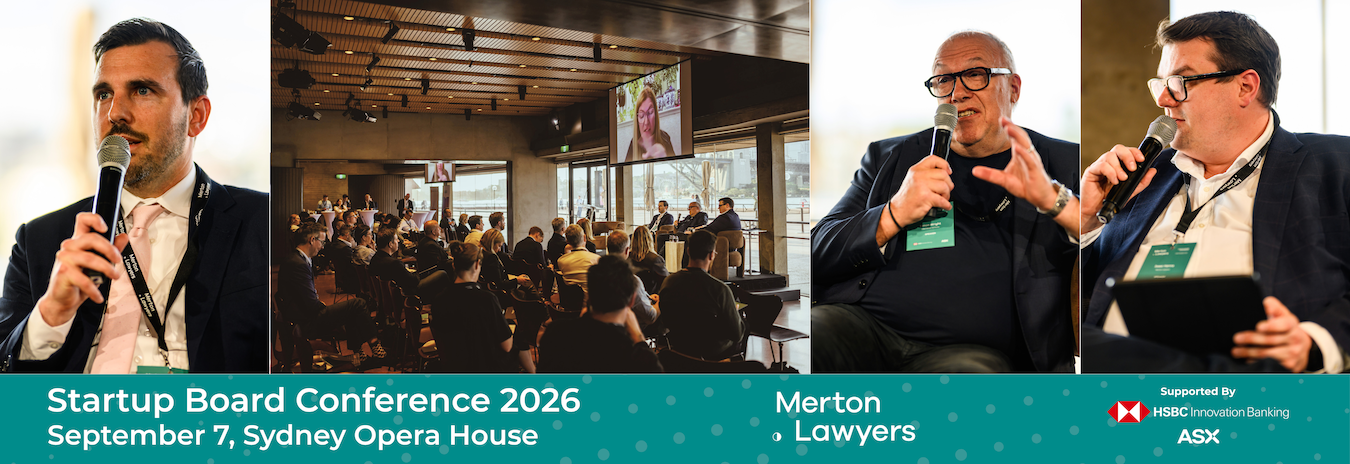
Featuring: BENJAMIN FLEMING (Sullivan & Cromwell, Melbourne), SIMON WRIGHT (InterValley Ventures, Melbourne), SUSAN STICK (Xero, San Francisco), ISAAC HANNA (Merton Lawyers, Melbourne)
This conversation sits very close to the heart of our Project Frontier work. Going to America isn't simply about opening an office or raising capital - it's about readiness, networks and capability, and that's exactly where this panel spent its time.
Our own Isaac set the tone: "The world does not wait patiently, and it does not wait on Australian terms." Simon made the case that most expansions that go wrong fail at "the very original decision," not in the execution. Benjamin described starting with whether founders "actually have the stomach for it, the plan, the strategy - and then work backwards from there."
Of particular interest was Susan's perspective on timing. It's easy to underestimate the complexity you add "the minute you become genuinely multinational," yet building public company governance at Series A can be counterproductive. As a company grows, she said, “the board becomes the group of people designed to help you succeed in a future world."
Session 11: From Zero to Inevitable
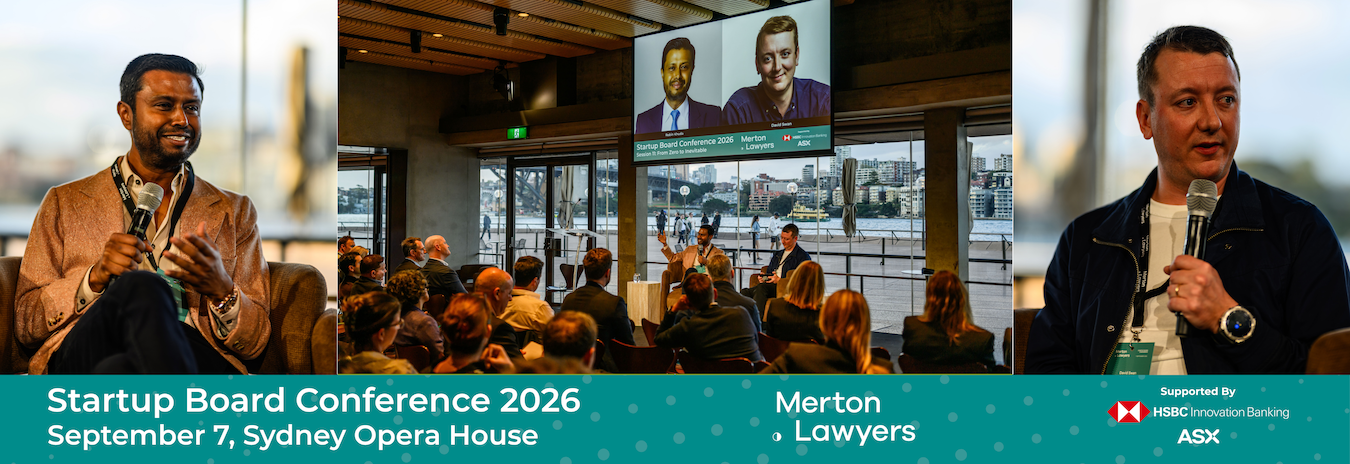
Featuring: ROBIN KHUDA (AirTrunk, Sydney), DAVID SWAN (The Age / Sydney Morning Herald, Melbourne)
What a way to close the day. This was a conversation many in the room had been waiting for, and it more than lived up to it. With Robin having just been named as #3 in the ‘Most Powerful Australian Technology Leaders - 2026’ in The Australian Financial Review, what has struck me most about Robin is not simply the outcome, but his willingness to share what he has learned, educate the next generation, and contribute back to the Australian ecosystem. That generosity came through in every answer.
David expertly guided a remarkably candid discussion that kept returning to judgment rather than headlines. The idea that control isn't only about your percentage on the cap table, but about governance and operational influence, was a great thread for a room full of founders and investors. So was the reminder that your leverage exists before you sign, not after.
Of particular interest was how Robin described the board's role changing as a company grows. He spoke briefly about when to say no to deals rather than yes, and about keeping his focus on two things above all: customers and employees. Hearing what it meant to share success with the team, and how that can change people's lives, was genuinely moving.
His closing advice for an enraptured audience: stay curious, and keep asking why.
In Summary.
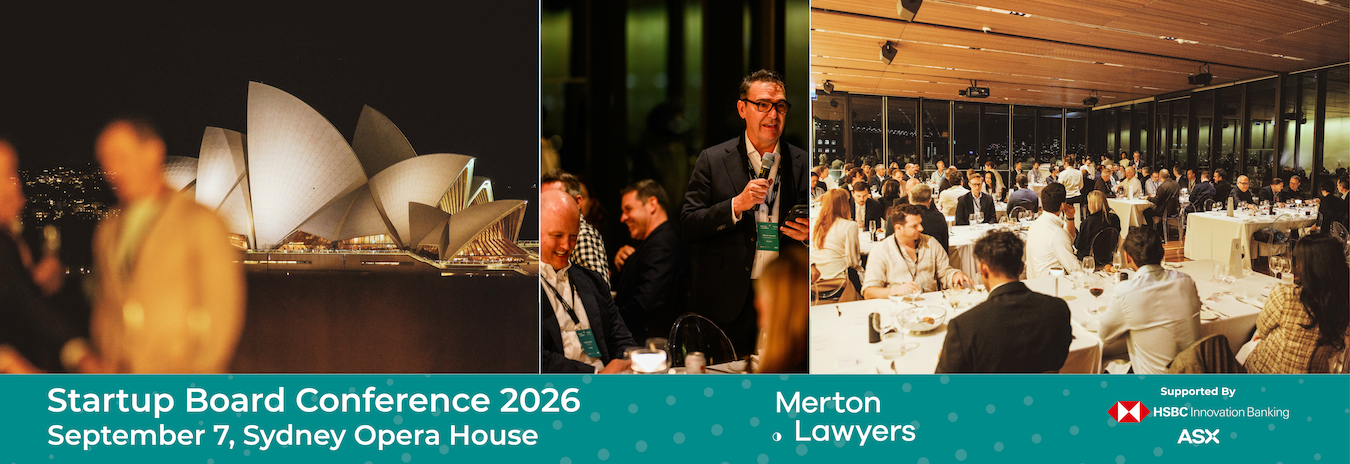
Looking back on the day, what stays with me is how generous every speaker was with their experience. Thank you to each of them for being so open, and to everyone in the room for bringing the same spirit to every conversation.
Our aim with this conference is to build a framework that's a bit more predictable and a bit more structured, but flexible enough that your board can spend its time adding genuine value. The Merton Lawyers Startup Board Handbook is a big part of that. It's a living document, and as new challenges emerge, best practices evolve and markets change, we'll keep updating it for all of our alumni, and attendees in future versions of the Startup Board Conference.
A special thank you to our partners, HSBC Innovation Banking and ASX. They're big brands, but the people behind them are incredibly important to this ecosystem. They're not just talking about their own organisations - they're talking about the Australian ecosystem as a whole.
Ultimately, that's what this is all about. We're trying to lift up the ecosystem, and be a catalyst for growth, and we’re determined to see positive impact arise from what we do next.
Thank you for reading, the Merton Lawyers Startup Board Course will return in 2027, at the Sydney Opera House once again.
Anthony Curtin, Cofounder Merton Lawyers.
Follow me on LinkedIn HERE